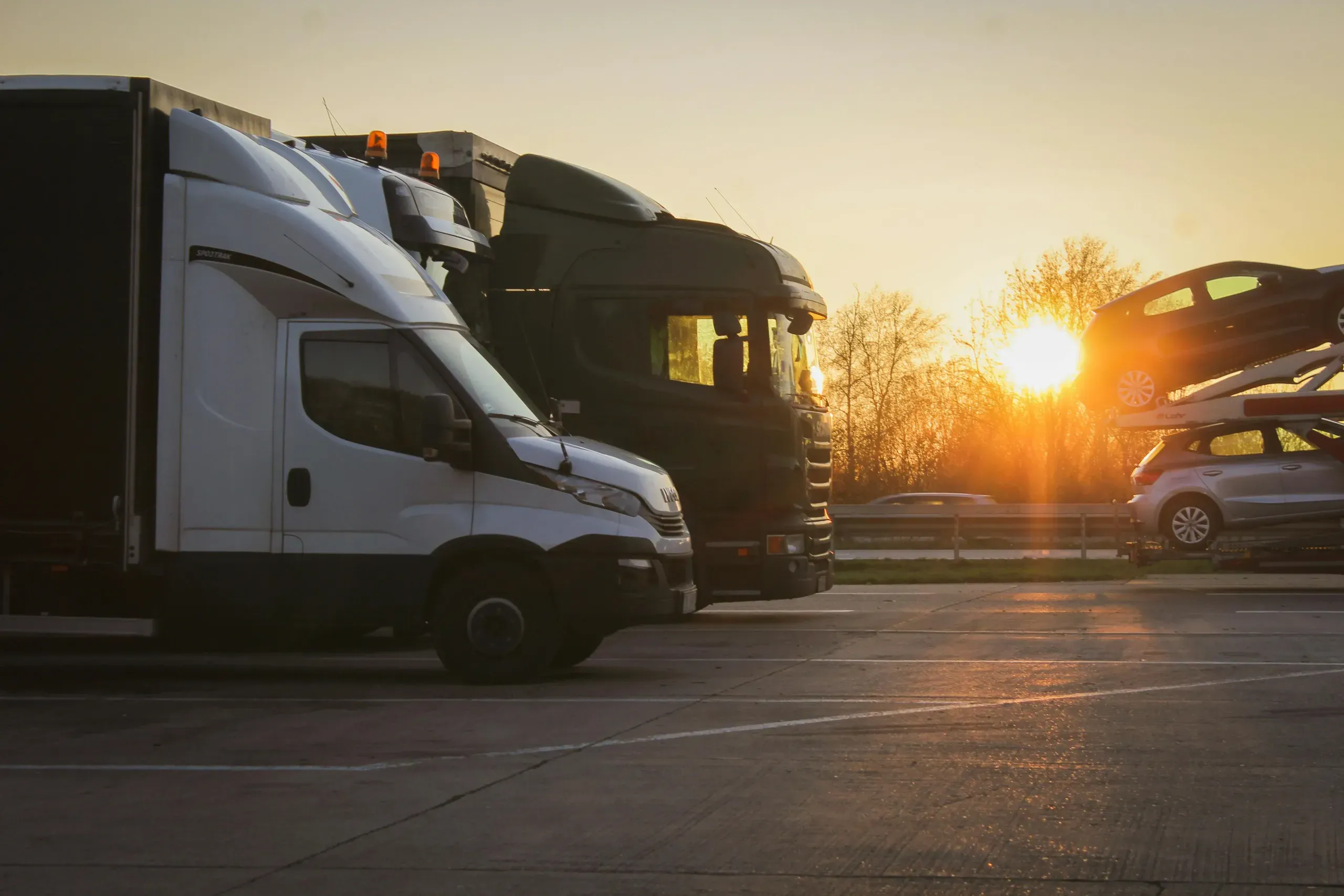
Ship Car from West Virginia to Louisiana
Shipping a vehicle from West Virginia to Louisiana covers approximately 1,036 miles, with most carriers completing the transit in 3 to 5 days. This route typically follows the I-59 corridor, moving your car from the Appalachian highlands down to the Gulf Coast. Whether you are relocating for a new job, sending a student to school, or buying a vehicle from an out-of-state seller, understanding the logistics is key. We will walk you through typical costs, transit times, the booking process, and how to verify carrier insurance so your transport is handled correctly from pickup to delivery.
- No-obligation quote within 2 minutes
- Price all-inclusive
- No charge until driver confirmed
- Distance
- 1,036 mi
- Transit time
- 3–5 days
- Open carrier from
- $1,175
How much does it cost to ship a car from West Virginia to Louisiana?
For a standard vehicle on this 1,036-mile route, open transport typically ranges from $1,175 to $1,550, while enclosed shipping usually falls between $2,225 and $2,975 with a transit time of 3 to 5 days. As a referral service, Ship Car Pros connects you with independent carriers from our vetted network, ensuring you receive a market-accurate rate from the drivers physically moving your car. Your final price isn't a random number; it is calculated based on several shifting variables. Factors such as your specific vehicle size, the time of year, and how close your pickup and delivery locations are to major interstates like I-59 all influence where your quote lands within these ranges. In the following sections, we will break down exactly how these cost factors work and the differences between trailer types.
What factors affect car shipping cost?
While distance is the primary driver of your quote, several secondary variables determine where your price falls within the typical range. Carriers look at the logistics of every load to ensure the trip is profitable and safe.
Here is what actually moves the needle on your West Virginia to Louisiana shipping cost:
- Vehicle dimensions and weight: Larger trucks and SUVs occupy more trailer space and increase fuel consumption compared to compact sedans.
- Transport type: Choosing an enclosed trailer for added protection typically costs 60% to 80% more than standard open transport.
- Pickup and delivery flexibility: Giving a carrier a five-to-seven-day window often secures a lower rate than requiring a specific two-day pickup.
- Seasonal demand: Rates often fluctuate during peak moving seasons or winter months when driver availability on the I-59 corridor shifts.
- Route accessibility: Picking up in a metro area is generally more affordable than a remote Appalachian location that requires a driver to divert.
- Vehicle operability: If your car does not run, the carrier must use a winch or specialized loading gear, which adds a premium.
Ship Car Pros helps you navigate these factors by matching your specific needs with the right carrier from our network.
Open vs. enclosed car transport: which should you choose?
Choosing between open and enclosed transport depends on your vehicle’s value and your tolerance for the elements. Open transport is the industry standard for daily drivers like sedans, SUVs, and trucks. Your vehicle travels on a multi-car trailer, exposed to weather and road dust, but fully insured. On the West Virginia to Louisiana route, open transport typically costs around $1,295 and is the most available option for fast matching.
Enclosed transport is a premium service where your vehicle stays inside a shielded trailer, protected from stone chips, rain, and debris. This typically costs around $2,475-roughly 1.6 to 1.8 times the price of open shipping. We recommend this for classic cars, luxury models, or vehicles with low ground clearance. While more expensive, it provides peace of mind for high-value investments. Ship Car Pros functions as a referral service to connect you with vetted carriers in both categories, ensuring your choice matches your car's specific needs.
- Open carrier
- $1,175–$1,550
- Standard 7–10 car hauler.
- Enclosed carrier
- $2,225–$2,975
- Sealed trailer for high-value vehicles.
How long does it take to ship a car from West Virginia to Louisiana?
Shipping a vehicle across the 1,036 miles from West Virginia to Louisiana typically takes between 3 and 5 days once the car is loaded onto the trailer. This timeline is based on the reality that a single driver can safely cover about 400 to 500 miles per day after accounting for mandatory rest breaks, fueling, and the time required to navigate local traffic during other pickups along the route. While the drive itself across the I-59 corridor is roughly 16 hours, the carrier’s schedule must accommodate multiple stops and variable road conditions. Factors like extreme weather or remote pickup locations can occasionally shift these estimates. We will take a closer look at what specifically influences these pickup windows and how the delivery process works in the following sections.
Which routes do carriers usually take?
Carriers moving vehicles from West Virginia to Louisiana typically start by navigating the steep grades of the Appalachian highlands via I-77 or I-79. Most drivers converge in the Charleston metro area before heading south through the West Virginia Turnpike. This stretch requires careful handling due to elevation changes at Flat Top Mountain and Sandstone Mountain. Once clear of the mountains, the primary route follows I-59 S through Alabama and Mississippi, providing a direct link toward the Gulf Coast. While major cities like Charleston or Morgantown offer the highest pickup density, carriers frequently make stops along the corridor to fill their trailers. As they enter Louisiana, drivers transition from rugged mountain terrain to the flat, bridge-heavy landscape of the Atchafalaya Basin, often utilizing the I-12 bypass to avoid New Orleans congestion for deliveries in Baton Rouge or Lafayette.
What can delay your shipment?
While most shipments arrive within the three-to-five-day window, specific regional factors can shift your timeline. In West Virginia, winter snow squalls near high-elevation passes like Sandstone Mountain often force carriers to slow down or wait for plows. Conversely, as drivers enter Louisiana, dense fog belts along the 18-mile Atchafalaya Basin Bridge frequently trigger speed reductions. Beyond weather, booking on a Friday often results in a Monday or Tuesday pickup, as carrier activity dips over the weekend. If you are shipping from an auction like Copart, missing gate pins or lot numbers will cause immediate delays. These variables are a standard part of long-haul logistics, and Ship Car Pros works to keep you informed as conditions change.
Popular Routes
Major city-to-city routes on the West Virginia → Louisiana corridor.
| From | To | Approx. distance | Transit |
|---|---|---|---|
| Huntington, WV | New Orleans, LA | ~720 mi | 3-5 days |
| Charleston, WV | Baton Rouge, LA | ~770 mi | 3-5 days |
| Morgantown, WV | Shreveport, LA | ~920 mi | 3-5 days |
| Parkersburg, WV | Lafayette, LA | ~860 mi | 3-5 days |
| Wheeling, WV | Lake Charles, LA | ~980 mi | 3-5 days |
| Weirton, WV | Houma, LA | ~940 mi | 3-5 days |
| Martinsburg, WV | Monroe, LA | ~920 mi | 3-5 days |
| Fairmont, WV | Mandeville, LA | ~840 mi | 3-5 days |
| Beckley, WV | Slidell, LA | ~710 mi | 3-5 days |
| Clarksburg, WV | Alexandria, LA | ~880 mi | 3-5 days |
How does shipping a car from West Virginia to Louisiana work?
Shipping a car from West Virginia to Louisiana is a straightforward three-stage process that begins with a detailed quote, moves into a coordinated pickup, and finishes with a secure delivery. You start by providing your vehicle specs and locations to receive an all-inclusive price. Once a carrier is matched to your route, a driver will meet you for a thorough inspection before heading south. Finally, your vehicle is unloaded at your destination for a final walk-through. We handle the logistics of connecting you with the right driver so you can focus on your move.
What happens between booking and pickup?
Once you accept your quote, we move into the logistical phase of matching your vehicle with a carrier heading south from West Virginia. Ship Car Pros acts as your coordinator, handling the back-and-forth with drivers so you don't have to.
- Post to the loading board: We list your shipment on the national marketplace where thousands of carriers look for loads to fill their trailers.
- Carrier assignment: A vetted carrier accepts the job, and our dispatch team confirms their insurance and safety rating before officially assigning them.
- Dispatch notification: You receive a confirmation with the name of the transport company, the driver’s phone number, and a projected pickup date.
- Window confirmation: The driver contacts you 12 to 24 hours in advance to narrow down their arrival time based on their current progress and traffic.
- Vehicle walkthrough: When the driver arrives, you both perform a 21-point inspection to document the car's condition on the Bill of Lading before it is loaded.
What is a bill of lading (BOL)?
The Bill of Lading (BOL) is the most critical document in the shipping process, serving as both your official receipt and a detailed condition report. When the driver arrives in West Virginia, you will perform a joint 21-point inspection, noting every existing scratch, chip, or dent on the BOL before the car is loaded. This creates a baseline for the vehicle’s condition.
At delivery in Louisiana, you must repeat this walkthrough. Inspect the vehicle thoroughly in daylight before signing the final BOL. If any new damage is found, it must be documented on this form to initiate an insurance claim. Once you sign the delivery BOL, you are legally confirming the vehicle arrived in the same condition it left, making the document your primary protection throughout the transit.
After delivery: registration and inspection in Louisiana
Once your vehicle arrives in the Pelican State, you have 30 days to register it with the Louisiana Office of Motor Vehicles (OMV). You will need to provide the original out-of-state title, proof of Louisiana liability insurance, and a completed Form DPSMV 1799. Be prepared to pay a title fee of $68.50 plus a license plate fee based on your vehicle's value.
Before you can finalize registration, your car must pass a Louisiana Safety Inspection. If you are living in Ascension, East Baton Rouge, Iberville, Livingston, or West Baton Rouge parishes, your vehicle must also pass an emissions test. Louisiana strictly enforces a "No Pay, No Play" law; driving without active insurance can bar you from recovering damages after an accident, regardless of fault. You can find forms and office locations at the Louisiana OMV website.
Back in West Virginia, remember to surrender your old license plates to the DMV to avoid registration suspension. Do not cancel your West Virginia insurance policy until you have your plate surrender receipt or have successfully registered the car in Louisiana.
How do you verify a car transport company is legitimate?
Verifying a carrier's legitimacy is the most important step in protecting your vehicle. Every company operating in the U.S. must be registered with the Federal Motor Carrier Safety Administration (FMCSA). You should always ask for their Motor Carrier (MC) and Department of Transportation (DOT) numbers. You can plug these into the FMCSA’s Licensing and Insurance database to confirm they have active operating authority and the required cargo insurance. If a company won't provide these numbers, walk away.
A major red flag is any provider asking for a deposit before a carrier is actually assigned to your route. Legitimate companies, including referral services like Ship Car Pros, only charge a deposit once a driver is confirmed and dispatched. If you are asked for an upfront "booking fee" just to list your car on the board, it is likely a lowball tactic.
Always insist on a written agreement that outlines the all-inclusive price. This should cover fuel, tolls, and insurance with zero deductible for you. Beyond government records, check third-party consumer sites like the Better Business Bureau (BBB) and Transport Reviews. Look for patterns in the feedback-specifically how they handle delays or communication. A legitimate provider will be transparent about their status as a broker or referral service and won't shy away from your technical questions.
How do I prepare my car for shipping?
Preparing your vehicle for the 1,000-mile trek from the West Virginia mountains to the Louisiana coast ensures a smooth handoff and protects your investment. While the carrier handles the heavy lifting, a few simple steps on your end prevent logistical delays.
Follow this checklist before the driver arrives for pickup:
- Wash the exterior: A clean car is essential for an accurate Bill of Lading inspection, as dirt can hide small scratches or dings.
- Document the condition: Take high-resolution, dated photos of the vehicle from every angle, including the interior and odometer.
- Remove personal belongings: Clear out all items except for the spare tire and jack. Remove toll tags, parking passes, and aftermarket GPS units to prevent loss or damage.
- Maintain a quarter-tank of fuel: This provides enough gas for loading and unloading while keeping the trailer's total weight within legal limits.
- Secure the vehicle: Disable any active alarms and provide the driver with a complete set of keys, including those for gas caps or trunks.
- Note mechanical quirks: Inform the driver of any leaks, touchy brakes, or specific starting procedures before they pull onto the trailer.
Once these steps are complete, your car is ready for the driver to perform the initial walkthrough and begin the journey south.
Specialty shipments from West Virginia to Louisiana
Not every transport fits into a standard box. Whether you are moving a high-value asset or a logistical puzzle, specific vehicle conditions change how a carrier approaches the route. We coordinate specialized transport for unique situations that require more than a basic open trailer. From salvage pickups to household moves involving several cars, understanding these categories helps you set realistic expectations for your West Virginia to Louisiana shipment.
How do you ship a car bought at Copart or IAA auction?
Shipping a vehicle from a Copart or IAA auction facility requires specific documentation that differs from a standard residential pickup. Before a carrier can even enter the facility, they must have three critical pieces of information: the lot number, the gate pin, and your buyer number. We cannot dispatch a driver until you have confirmed the vehicle is "paid in full" and ready for release.
As a referral service, Ship Car Pros connects you with carriers experienced in auction logistics, but you must provide these details upfront to avoid "dry run" fees. Auction pickups often add one to three days to your timeline compared to a home pickup. This is because facilities require carriers to schedule specific windows, and drivers often face long wait times at the gate. Additionally, if the vehicle is inoperable or missing keys-common with auction purchases-the carrier must use specialized winch equipment, which we will coordinate during the booking process.
How do you ship an inoperable car?
Shipping an inoperable vehicle from West Virginia to Louisiana is a common request, but it requires specific equipment that not every carrier maintains. Most non-running cars are loaded using a heavy-duty winch, which pulls the vehicle onto the trailer with a steel cable. For this to work, your car must still "roll, brake, and steer." If the wheels are locked or the steering column is broken, a standard carrier cannot load it, and you may need a specialized flatbed or forklift service.
Because inoperable vehicles require more time, physical labor, and specialized gear, carriers always apply a surcharge to the standard rate. This extra cost covers the added risk and the equipment maintenance. When you book through Ship Car Pros, it is vital to disclose the vehicle's exact condition upfront. This ensures we match you with a driver who has the right tools to safely winch your car for the 1,000-mile journey south.
How do you ship multiple cars at once?
Shipping multiple vehicles from West Virginia to Louisiana is a common choice for families relocating or collectors moving several assets at once. When you book more than one vehicle on the same route, the per-car rate typically drops. This discount exists because the carrier can fill multiple spots on their trailer at a single stop, saving them time and fuel.
Ship Car Pros works to match your multi-car shipment with a single carrier so your vehicles stay together throughout the 1,000-mile journey. While most shipments are handled by one driver, very large moves-such as shipping four or more trucks-might be split between two trailers depending on current capacity along the I-59 corridor. Bundling your vehicles is the most efficient way to reduce your total cost while ensuring your entire household arrives in Louisiana on the same timeline.
Is it cheaper to ship a car or drive it from West Virginia to Louisiana?
Deciding whether to ship or drive from West Virginia to Louisiana usually comes down to how you value your time. On paper, driving is the less expensive option. Based on the 1,036-mile distance and the 2024 AAA average driving cost of $0.70 per mile, the trip costs approximately $845. This figure includes about $725 for fuel, maintenance, and wear, plus $120 for the single overnight stay required for a 15-hour journey.
In contrast, shipping your car on an open trailer typically costs around $1,295. While the $450 difference is notable, it covers more than just the transport. When you ship, you avoid two full days behind the wheel navigating the elevation changes of the Appalachians and the heavy truck traffic of the I-59 corridor. You also eliminate the logistical headache of coordinating a multi-car move or the need for a flight back if you are delivering a vehicle to a buyer.
For many, the choice depends on opportunity cost. Driving requires time off work, meal expenses, and the physical fatigue of a 1,000-mile trip. Shipping allows you to fly to your destination in three hours while an independent carrier from the Ship Car Pros network handles the long-haul miles. Both methods are viable; you simply have to decide if the convenience of door-to-door service outweighs the savings of a solo road trip.
| Ship it | Drive it | |
|---|---|---|
| Total cost | $1,175–$1,550 all-in | ~$965 (fuel + lodging + meals) |
| Your time | 0 hours | ~17 hrs driving + overnight |
| Wear & tear | None | 1,036 mi added; ~$0.10/mi depreciation |
| Risk | Insured in transit | Personal liability + fatigue |
For most West Virginia → Louisiana shipments, ship is the better value once time and depreciation are counted.
Frequently asked questions
How much does it cost to ship a car from West Virginia to Louisiana?
Shipping a standard car from West Virginia to Louisiana typically costs between $1,175 and $1,550 for open transport. If you need enclosed shipping for a classic or luxury vehicle, the price usually falls between $2,225 and $2,975. Your exact rate depends on your vehicle's size, your specific pickup and delivery zip codes, and the current seasonal demand along the I-59 corridor.
How long does it take to ship a car from West Virginia to Louisiana?
Transit usually takes 3 to 5 days once your vehicle is loaded onto the carrier's trailer. This timeline covers the 1,036-mile journey down through the I-59 corridor. Keep in mind that this estimate begins after pickup, and drivers are limited by federal regulations to driving about 400 miles per day. Weather conditions in the Appalachian mountains or heavy traffic near the Gulf Coast can occasionally extend this window.
Should I use open or enclosed transport for my vehicle?
You should use open transport for standard daily drivers, as it is the most affordable and widely available option. Roughly 85% of vehicles ship this way. Enclosed transport is best if you are moving a high-value classic, luxury model, or custom car that needs absolute protection from road debris and weather. Enclosed trailers typically cost about 60% to 80% more than standard open shipping on this route.
When do I pay the deposit for my auto transport?
You only pay your deposit after a vetted carrier is officially assigned and dispatched to your specific route. A legitimate transport provider will never charge your card just to provide a quote or post your vehicle to the loading board. Once the driver is confirmed, the deposit is processed, and you will pay the remaining balance directly to the driver when your car is delivered in Louisiana.
Is my car fully insured during the drive down to Louisiana?
Yes, your vehicle is fully insured from the moment it is loaded in West Virginia until it is delivered in Louisiana. Every carrier is legally required to carry active cargo insurance, which provides bumper-to-bumper coverage with zero deductible for the customer. The driver will document your car's condition on a Bill of Lading at pickup, and this document serves as your official protection in the rare event of transit damage.
Do I have to be present when the carrier picks up my car in West Virginia?
No, you do not need to be physically present when the driver arrives to load your vehicle. You can assign a trusted family member, friend, or neighbor to hand over the keys and sign the initial Bill of Lading inspection. You just need to ensure your designated contact is at least 18 years old and available during the scheduled pickup window to walk around the car with the driver.
Will the carrier pick up or deliver my car on a weekend?
Carriers will frequently deliver vehicles on a weekend, as they unload whenever they reach your destination. However, weekend pickups in West Virginia are much less reliable because overall carrier activity slows down significantly on Saturdays and Sundays. If you book a shipment late on a Friday, it is highly likely that your vehicle will not actually be picked up until the following Monday or Tuesday.
What happens if I book with multiple auto transport brokers at the same time?
If you book with multiple brokers, your vehicle will be posted to the national loading board several times simultaneously. Carriers can see these duplicate listings and will often bid the price up, meaning you end up accidentally bidding against yourself. Instead of securing a faster pickup, this creates confusion and usually results in your car sitting unclaimed or costing you significantly more money to move.